
With Type 2 Diabetes
I am learning how the disease
affects my body.
GIP works to maintain Glycemic control
Despite their best efforts, people with T2D struggle to manage their A1C1
In people with T2D, insulin resistance leads to a decline in beta cell function, resulting in hyperglycemia.2,3
PROGRESSIVE NATURE OF T2D

*Adapted from Freeman JS. A physiologic and pharmacological basis for implementation of incretin hormones in the treatment of type 2 diabetes mellitus. Mayo Clin Proc.2010;85(suppl12):S6.
GIP may help maintain blood glucose level in 2 important ways5,7,8

- Enhances glucose-dependent insulin secretion from beta cells
- Improves insulin sensitivity based on preclinical data
GIP And The Incretin Effect
GIP has a greater contribution to the incretin effect than GLP-1 in healthy humans.
Incretins enhance glucose-dependent insulin secretion from beta cells.5
THE INCRETIN HORMONES GIP AND GLP-1 DRIVE THE INCRETIN EFFECT (augmentation of insulin release after nutrition ingestion)

Adapted from Nauck and Meier, Meier JJ. GIP and GLP-1; stepsiblings rather than monozygotic twins within the incretin family. Diabetes. 2019;68:899
Estaban Jodar, MD, Discusses GIP and the Incretin Effect
GIP And Insulin Senstivity
People with T2D have a diminished incretin effect3,10


Based on preclinical studies.
*Adapted from Nauck MA, Meier JJ. Incretin hormones; their role in health and disease. Diabetes Obes Metab. 2018;20(suppl 1):5-21. 2018 John Wiley & Sons Ltd; used with permission.

GIP And Adipose Tissue
Excess weight negatively influences insulin sensitivity.7,8,11
In general, people who have overweight or have obesity can be burdened with insulin resistance, leading to a decline in beta cell function. The result is hyperglycemia, a known cause of microvascular and macrovascular complications. 2,3,6
Within Adipocytes, GIP May Improve Insulin Sensitivity7,8,11
Preclinical studies suggest that, in adipocytes, GIP may regulate lipid metabolism and improve insulin sensitivity.7,8,11
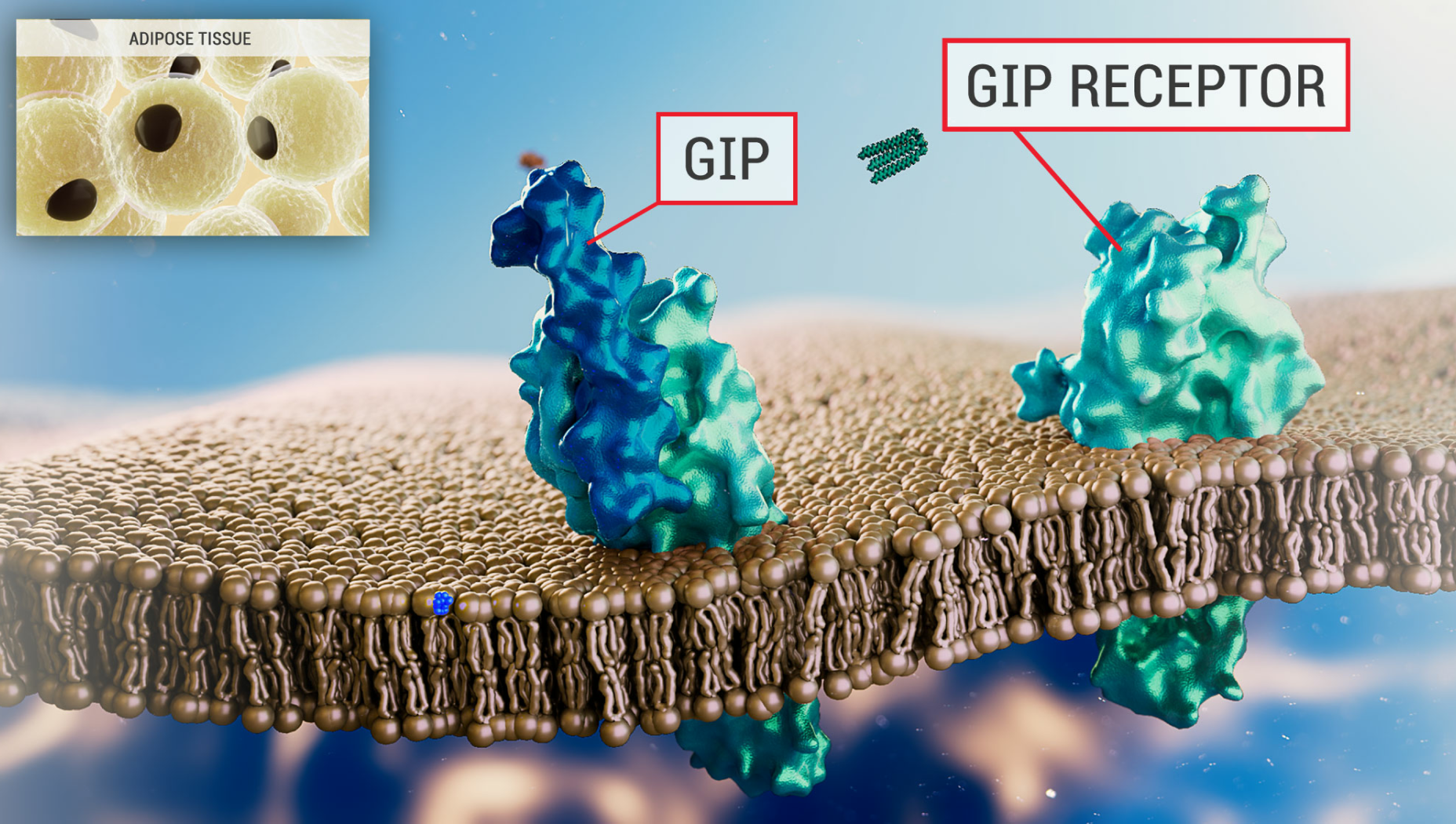
T2D is associated with impaired lipid partitioning. Dysregulated lipid storage and metabolism in adipose tissue contribute to disease pathophysiology.8,12,13
GIP May Help Adipose Tissue Function Normally, Storing And Releasing Lipids As Needed8,13

Preclinical studies suggest that GIP enhances the uptake of TG and free fatty acids into adipocytes, which may lower plasma TG levels. The coupling of lipid intake, with its appropriate storage in adipose tissue, is important for maintaining metabolic health and glycemic control. 11,14-16

GIP may have a greater impact on Weight-related mechanism than you know*
*Based on preclinical trials
CV=cardiovascular; GIP=glucose-dependent insulinotropic polypeptide; GLP-1=glucagon-like peptide-1; T2D=type 2 diabetes.
References
- American Diabetes Association. Standards of medical care in diabetes-2021, Diabetes Care. 2021;44(suppl 1):S1-S232.
- Davidson JA, Parkin CG. Is hyperglycemia a causal factor in cardiovascular disease? Does proving this relationship really matter? Yes. Diabetes Care. 2009;32(suppl 2):S331-S333. doi:10.2337/dc09-S333
- Freeman JS. A physiologic and pharmacological basis for implementation of incretin hormones in the treatment of type 2 diabetes mellitus. Mayo Clin Proc. 2010;85(suppl 12):S5-S14. doi:10.4065/mcp.2010.0467
- DeFronzo RA. Overview of newer agents: where treatment is going. Am J Med. 2010;123(suppl 3):S38-S48. doi:10.1016/j.amjmed.2009.12.008
- Nauck MA, Meier JJ. The incretin effect in healthy individuals and those with type 2 diabetes: physiology, pathophysiology, and response to therapeutic interventions. Lancet Diabetes Endocrinol. 2016;4(6):525-536. doi:10.1016/S2213-8587(15)00482-9
- Laiteerapong N, Ham SA, Gao Y, et al. The legacy effect in type 2 diabetes: impact of early glycemic control on future complications (The Diabetes & Aging Study). Diabetes Care. 2019;42(3):416-426 doi:10.2337/dc17-1144
- Mohammad S, Ramos LS, Buck J, Levin LR, Rubino F, McGraw TE. Gastric inhibitory peptide controls adipose insulin sensitivity via activation of cAMP-response element-binding protein and p110 ß isoform of phosphatidylinositol 3-kinase. J Biol Chem. 2011;286(50):43062-43070. doi:10.1074/jbc.M111.289009
- Nauck MA, Meier JJ. Incretin hormones; Their role in health and disease, Diabetes Obes Metab. 2018 Feb;20 Suppl 1:5-21. DeFronzo, R.A. Insulin resistance, lipotoxicity, type 2 diabetes and atherosclerosis; the missing links. The Claude Bernard Lecture 2009. Diabetologia 53, 1270-1287 (2010).
- Nauck MA, Meier JJ. GIP and GLP-1: stepsiblings rather than monozygotic twins within the incretin family. Diabetes. 2019;68(5):897-900. doi:10.2337/dbi19-0005
- Nauck MA, Meier JJ. Incretin hormones: their role in health and disease. Diabetes Obes Metab. 2018;20(suppl 1):5-21 doi:10.1111/dom. 13129
- Finan B, Müller TD, Clemmensen C, et al. Reappraisal of GIP pharmacology for metabolic diseases. Trends Mol Med. 2016;22(5):359-376. doi:10.1016/j.molmed.2016.03.005
- Gastaldelli A. Insulin resistance and reduced metabolic flexibility: cause or consequence of NAFLD? Clin Sci (Lond). 2017;131(22):2701-2704. doi:10.1042/CS20170987
- Jorge-Galarza E, Medina-Urrutia A, Posadas-Sánchez R, et al. Adipose tissue dysfunction increases fatty liver association with pre diabetes and newly diagnosed type 2 diabetes mellitus. Diabetol Metab Syndr. 2016;8:73. doi:10.1186/s13098-016-0189-6
- Asmar M, Simonsen L, et al. Glucose-dependent insulinotropic polypeptide may enhance fatty acid re-esterification in subcutaneous abdominal adipose tissue in lean humans. Diabetes. 2010;59(9):2160-2163. doi:10.2337/db10-0098
- Asmar M, Tangaa W, Madsbad S, et al. On the role of glucose-dependent insulintropic polypeptide in postprandial metabolism in humans. Am J Physiol Endocrinol Metab. 2010;298(3):E614-E621. doi:10.1152/ajpendo.00639.2009
- Frayn KN, Karpe F. Regulation of human subcutaneous adipose tissue blood flow. Int J Obes, 2014;38:1019-1026. doi:10.1038/ijo.2013.200